
Buying Waterfront in Bonita Springs: What to Inspect First
A house inspection ends at the top of the bank. On the Imperial River, what sits past that point includes three conditions a buyer inherits permanently and cannot renovate afterward.
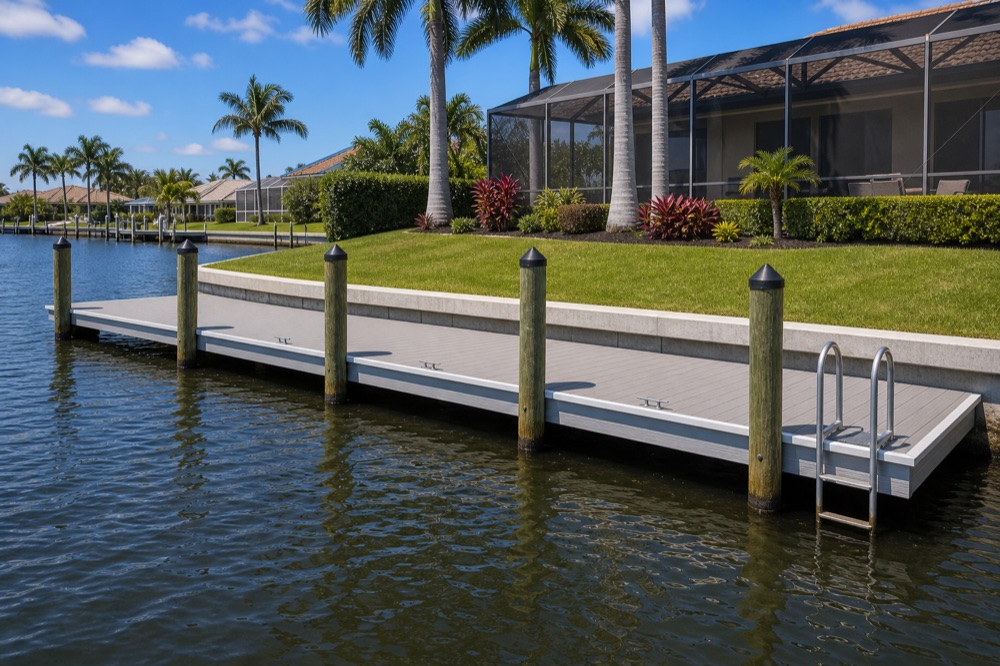
- Outside the house report
- The dock, lift, pilings and wall sit past where an inspector stops
- The Bonita-specific question
- Where on the river the dock actually sits
- The one you cannot change
- A fixed US 41 bridge caps boat height above it
- The paperwork one
- Permit history through the City of Bonita Springs
- The one people miss
- Evidence of past high water, not just storm damage
Key takeaways
- A house inspection ends at the top of the bank. The dock, lift, seawall and pilings sit past that line, and nobody in the transaction is obliged to look at them.
- Ask where on the Imperial River the dock actually sits: upriver of the fixed US 41 bridge changes what boat can ever live there.
- Ask for permit history through the City of Bonita Springs. Unpermitted work becomes the buyer's problem at closing.
- Look for evidence of past high water as well as storm damage, the river and its canals rise from inland rain, not only from the tide.
- Leverage expires at the closing table. The same tired seawall is a price negotiation on one side of it and a personal project on the other.
Most of a Bonita Springs waterfront purchase gets examined properly. An inspector walks the house and hands you a document you can negotiate against. Then the report ends at the top of the bank, and the part the seller spent the most to build is the part nobody is paid to look at.
That gap exists on every waterfront lot in Florida. What sharpens it here is the water: Bonita is a river town, and a buyer on the Imperial River takes on conditions a buyer on a dredged canal grid never has to weigh.
What does the river decide before you reach the dock?
Position and height. Both belong in your first week.
Position. A dredged grid is uniform by design. A river is not: a slip near downtown and a slip down at the Fish Trap Bay end are not the same asset with a different view. One sits in narrow, sheltered water; the other at the edge of a bay system, where wind gets a long run at the surface and the structure works harder on a breezy afternoon. What decides the specification is not the neighborhood name but what lies directly in front of the dock. Our guide to the water here follows the river down.
Height. A fixed highway bridge carries US 41 over the Imperial River, and fixed means it never opens. A property upriver of it has a permanent ceiling on how tall a boat can be and still reach the open bay, and no credit or addendum adjusts that. If a particular boat is the reason you are buying the house, resolve it first.
Why is high water a separate question from storm damage?
Because a river drains land as well as meeting a tide. A dredged canal comes up when the Gulf pushes water into it; the Imperial River does that too, and it also carries whatever inland rainfall sends downstream toward the bay. So a property here can hold a record of high water with no memorable coastal storm attached to it, which our Bonita Springs storm page works through.
For a buyer that becomes four things visible on a walkthrough and absent from any disclosure form:
- Silt or staining sitting above the line the water normally rests at, on piling faces and across the wall.
- Vegetation and trash lodged up in the framing under the deck, where nothing gets cleaned.
- A waterline on a dock box, a pedestal, or the housing of a lift motor.
- Mulch, grit or shell stranded on the high side of the bank, well back from the water.
None of it disqualifies a property. All of it earns a direct question to the seller, and it should shape where you site electrical, storage and anything else you would rather not buy twice.
Nor is the shoreline necessarily a wall: stretches of this water are natural, mangrove-lined bank, which fails differently and gets repaired differently. Our Bonita shoreline guide covers the range.
What deserves your hour on the dock?
Four assemblies. The wall first, because it is the costliest thing on the lot to put right.
The seawall. Start in the grass, not on the cap. Ground that gives under a heel, pavers sitting low, a trough parallel to the wall, a fresh hole near the cap: each says fill is leaving your yard, and that starts long before a wall looks troubled. What that erosion looks like is better read before a walkthrough than after. Then read the wall: cracking worked through the cap, seams opening between panels, weep holes plugged solid or passing sand rather than water. Sight the run end to end and note any panel out of plane with the ones beside it. The full list runs longer than what a buyer can see: the tiebacks and the footing are buried and submerged, and no walkthrough reaches either.
The pilings. Put a shoulder into each one and see whether anything gives. Then read the band of growth and stain every piling wears: those bands should describe one line down the row, and a piling carrying its band higher or lower than the rest has travelled. Check the timber where the water works at it, at the surface and just beneath. Realistic service life in salt water sets the expectation.
The framing and the fasteners. Decking is the cheapest thing on a dock and the easiest to swap before a listing, so get under it. Every joint where a beam lands on a piling is somewhere a gap can open, wood can crush, a bolt can rust or work loose, and a hole can go oval. Tired bones under a beautiful new surface photograph better than a sound dock does, which is why that upgrade is so common before a sale. Repair or replacement is the next question.
The lift. The one item here that gives an honest answer. Read the cable end to end rather than across the span visible from the deck: broken strands, rust weeping out of the lay, fraying, a flattened section. The warning signs cover what each looks like in the hand. Then ask for it to be run, all the way down and back, while the seller stands there. A lift nobody has cycled in months and nobody will demonstrate is a line item, not a feature. And measure capacity against the boat you intend to keep, loaded: hull, fuel, water and the gear that never comes off, plus 20 to 30 percent on top, because a lift that suited the seller’s boat can be out of range for yours while looking perfectly sound. Running that number takes five minutes.
Whose file are you asking for?
The City of Bonita Springs, and that is not a formality.
Bonita incorporated in 2000 and reviews shoreline work itself, through its own Dock and Shoreline Permit rather than a line on a house permit, so the record you want for a dock, a lift or a wall here is a city record. How permitting runs here lays out the city’s role and the state and federal layers above it.
Ask for the permit on each structure separately, and treat a missing one as an open question rather than a settled one. Work that was never permitted does not expire quietly. It travels with the deed, and when it surfaces the menu is after-the-fact approval, alteration or removal, on a schedule somebody else sets. It also waits for your own sale, because the next buyer’s inspection period will run the way yours is running now. How that plays out is worth reading before you write the offer.
When does all of this stop being negotiable?
At the closing table, and not a minute past it.
Inside the inspection period a tired seawall is a number: a credit, a seller repair, a lower price, or a clean reason to walk. The morning after closing, that same wall is a project with your name on it, at retail, on whatever schedule the water allows. Nothing about the wall changed overnight. Only who pays for it changed.
The checklist version is worth keeping open on your phone at a showing. We walk properties with buyers before closing and say plainly what the dock, the lift and the wall actually are: sound, tired, or a replacement waiting for a date. Free on-site assessment anywhere on Bonita Springs water: (239) 397-3400.
The rest of our Bonita Springs library: permits, water, storms, and what we actually see on these docks.